

 Ragon Institute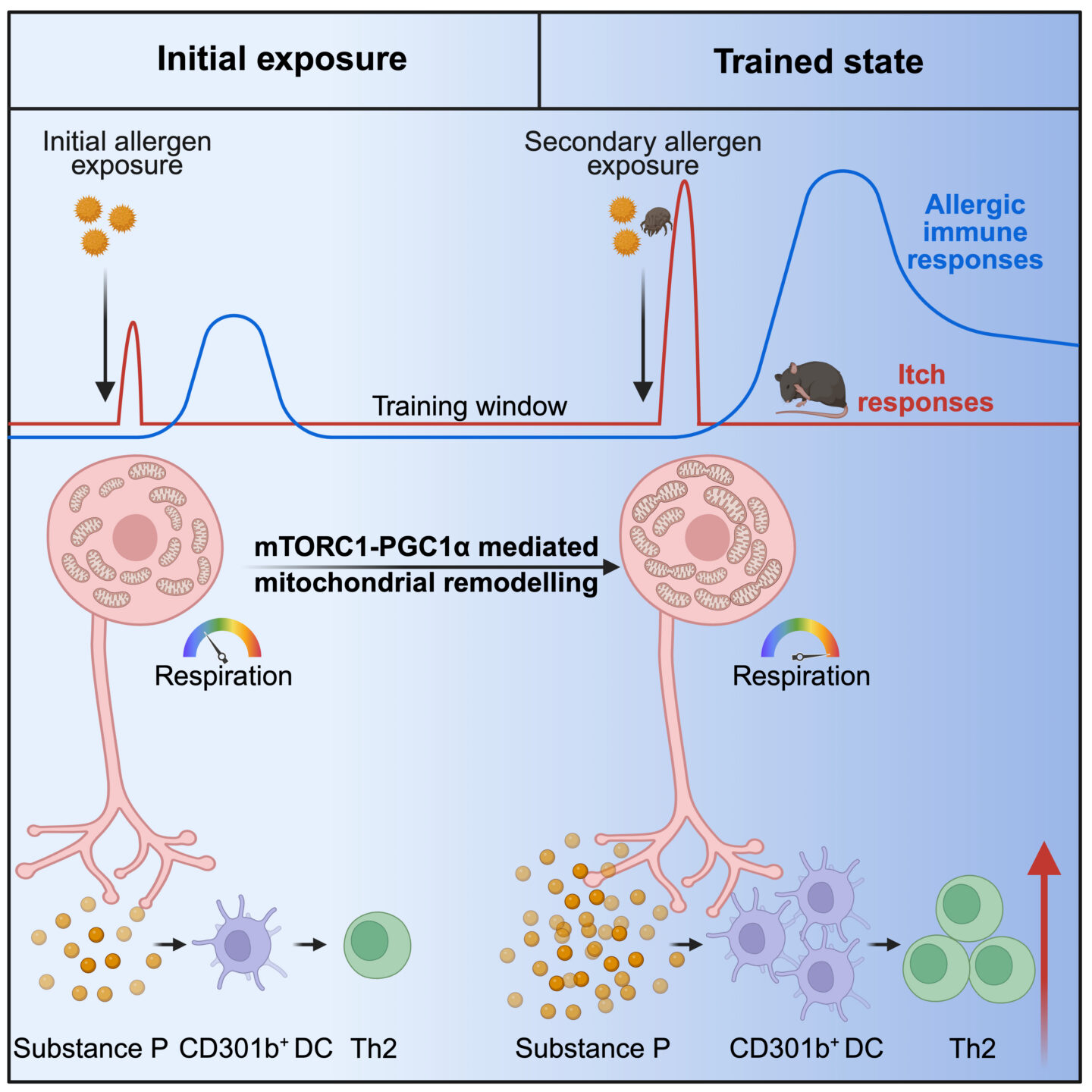
Many people who develop an allergy to a new dog, a dusty apartment or seasonal pollen notice it only after weeks or months of exposure. A new study from the lab of Caroline Sokol, MD, PhD, at the Ragon Institute of Mass General Brigham, MIT, and Harvard offers one explanation: the nerve cells that sense itch can keep a record of past allergen exposures and respond more strongly the next time.
The study Sensory neuronal mTORC1 kinase signaling establishes neuroimmune memory that initiates allergic immunity, published in Immunity and led by first author and postdoctoral fellow Xueping Zhu, PhD, describes a process the researchers call “neuroimmune training.”
Sokol’s lab previously showed that sensory neurons in the skin can directly detect allergens, many of which contain enzymes that cut apart proteins. In response, the neurons trigger itch and release signals that steer the immune system toward an allergic response. But a single low-level exposure is often not enough to start an allergy.
Using pre-clinical models, the team found that a first allergen exposure switched on a signaling pathway called mTORC1 inside sensory neurons. This pathway remodeled the neurons’ mitochondria, the structures that supply a cell’s energy, and the primed neurons became easier to activate. On a second exposure a week later, the subjects scratched more and mounted a stronger allergic immune response. Blocking mTORC1 or weakening the neurons’ mitochondria erased this effect. The heightened state lasted about three weeks before fading.
“This may help explain why someone can initially appear unaffected by a new puppy, for example, but develop an allergy after living with it over time,” Sokol said.
The neuronal memory also extended beyond the original allergen. The immune system recognizes an allergen’s precise molecular structure, but sensory neurons respond to what an allergen does, such as damaging cells or breaking down proteins. Neurons primed by papain, an enzyme from papaya, responded more strongly to house dust mite and to the mold Alternaria alternata.
“Perhaps the most interesting finding from our study is that neuronal memory is not specific to the original allergen,” Sokol said.
That may help explain polysensitization, the tendency of people with allergies to become sensitized to many different substances rather than just one.
Neuronal training has not yet been shown in people. If the mechanism holds in humans, targeting mTORC1 signaling or mitochondrial function in sensory neurons could offer a way to limit the spread of allergies from one substance to many.