

 Ragon Institute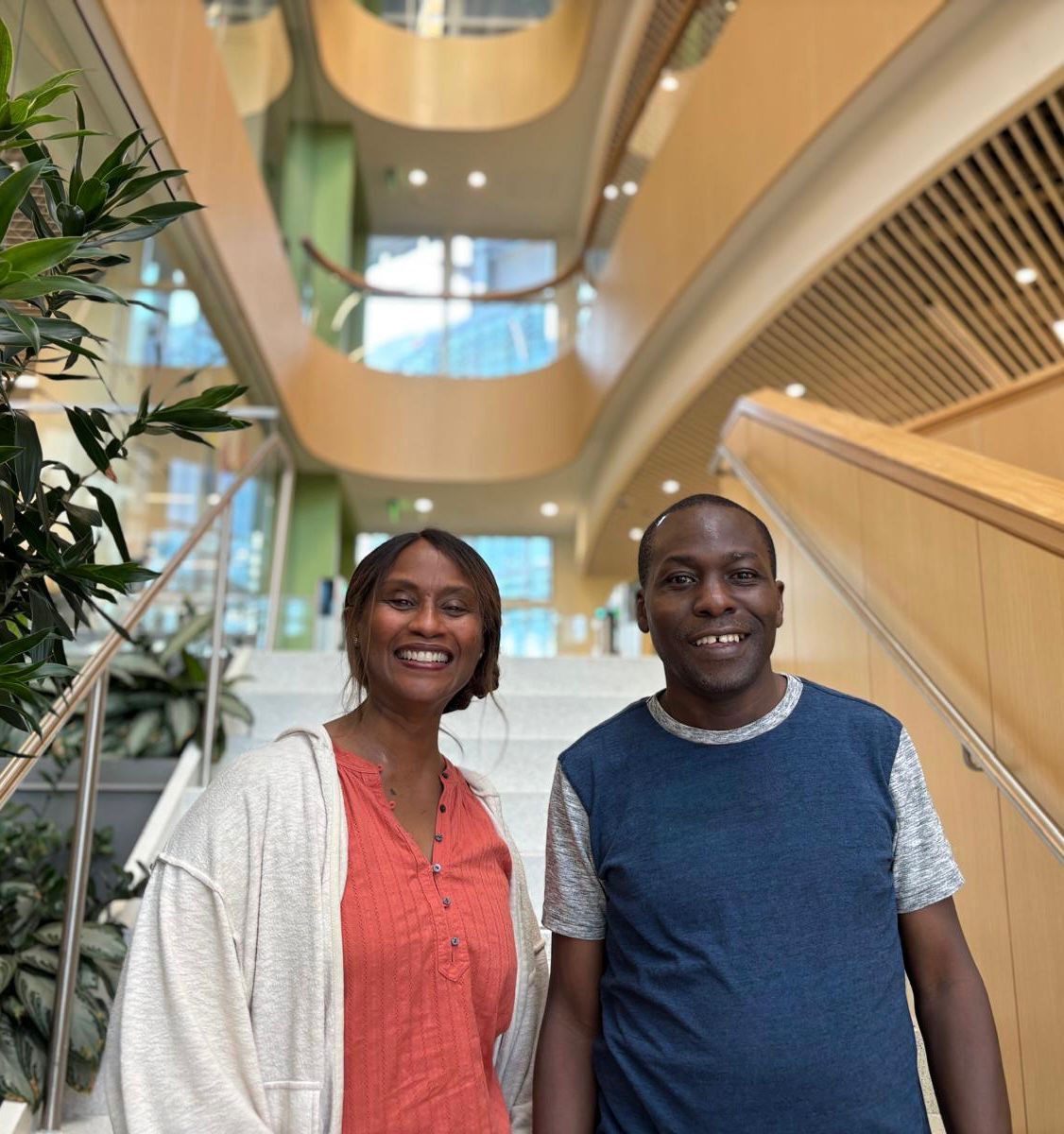
The Kenyan researcher joined the Ragon for six weeks, collaborating on research on pregnant women with malaria.
In May, the Idris Lab welcomed Dr. Bartholomew Ondigo, a visiting scholar from Kenya, to assist in Dr. Azza Idris’s ongoing research regarding the effects of malaria on pregnant women.
Ondigo, a senior lecturer and principal investigator in the Department of Biochemistry and Molecular Biology at Egerton University in Kenya, was selected as the Harvard Global Health Institute (HGHI) 2025–2026 Visiting Research Scholar. The Visiting Research Scholars Program provides Harvard faculty with an opportunity to strengthen collaboration with international researchers in global health.
Ondigo obtained a PhD from Maseno University in Kenya through an NIH sponsored program. He is a distinguished researcher whose knowledge, skills, and personal experience greatly contributed to the Idris Lab’s long-term goals of better understanding placental malaria as well as developing tools to combat the disease.
In the six weeks that Ondigo has been at the Ragon, he has provided unique insight into how malaria can infect a pregnant woman’s placenta.
Once the malaria parasite (Plasmodium) enters the placenta, the disease can hide and evade destruction by the immune system. The result of which can cause placental insufficiency, which would block a fetus from receiving crucial nutrients, thereby increasing the possibility of adverse outcomes such as premature birth.
“We are trying to understand the inflammatory aspects of the infection and the type of immune response that’s mounted by the mom,” Idris said, “and we’re also developing ways to prevent it, either through isolating protective antibodies or developing vaccines.”
Idris credits Ondigo with being able to provide a humanistic lens to their research by recounting for Lab members his experience in interacting with malaria patients in his home country of Kenya.
“It’s been really incredible working with Bart, who’s on the front lines caring for women affected by malaria in Kenya,” Idris said. “He brings a perspective that you simply can’t gain from reading papers or working in the lab. Hearing firsthand about the realities faced by patients and healthcare workers makes our science more meaningful and helps keep our research grounded in the needs of the communities we’re ultimately trying to serve. ,” Idris said.
Idris, who is originally from Sudan, noted that her lab is fortunate to have people from many different backgrounds, but Bart brings something uniquely valuable, decades of firsthand experience working with malaria in the communities most affected. That perspective reminds them why this work matters and strengthens the exchange of ideas between the field and the lab .
A chance meeting in Chicago at a conference for the American Society for Tropical Medicine and Hygiene in 2023 allowed Ondigo and Idris to meet and cultivate a fruitful working relationship.
“We sat together, we discussed, and during our discussions we realized we had common goals in studying malaria,” he said. “And I realized that working with her would be a win-win scenario, so when I went back home to Kenya we stayed in touch.”
The two kept in contact, meeting occasionally over Zoom and discussing potential opportunities to collaborate in the years that passed. Finally, in 2026, Idris invited Ondigo to the Ragon for this 6-week collaboration.
“The Idris Lab team has all been so open to me,” said Ondigo. “I’ve had the chance to have one-to-one discussions with them, work with them individually in the lab, and I’m happy looking back at what we’ve achieved and what we’ve gone through”
Ondigo’s energetic presence will certainly be missed in the Idris lab, with Idris commending him for his openness and warm character.
“He has been a very generous and engaging partner in the work,” said Idris. “He’s a good thought partner, in terms of brainstorming ways that we could do things. He’s also very humble and very hard working.”
Long-term, the pair hope their collaboration will lead to the development of lab- and community- based health solutions for pregnant women with malaria, along with continuing to train emerging scholars in the field of malaria research.
“We want to continue training emerging scholars to venture into this space, and really assist in capacity building,” Ondigo said, “and most importantly we want to develop the knowledge base of our institutions to put resources towards fighting malaria.”
Ondigo praised the dedication and cordial nature of the Ragon staff as well as expressing joy in the ability to work in-person with its staff. An opportunity that he owes entirely to his chance meeting with Idris in Chicago years ago.
“I’ve had a wonderful experience working with them and discussing with them,” he said. “I cannot regret the journey that led me here to work face-to-face with Azza at the Ragon.”