

 Ragon Institute
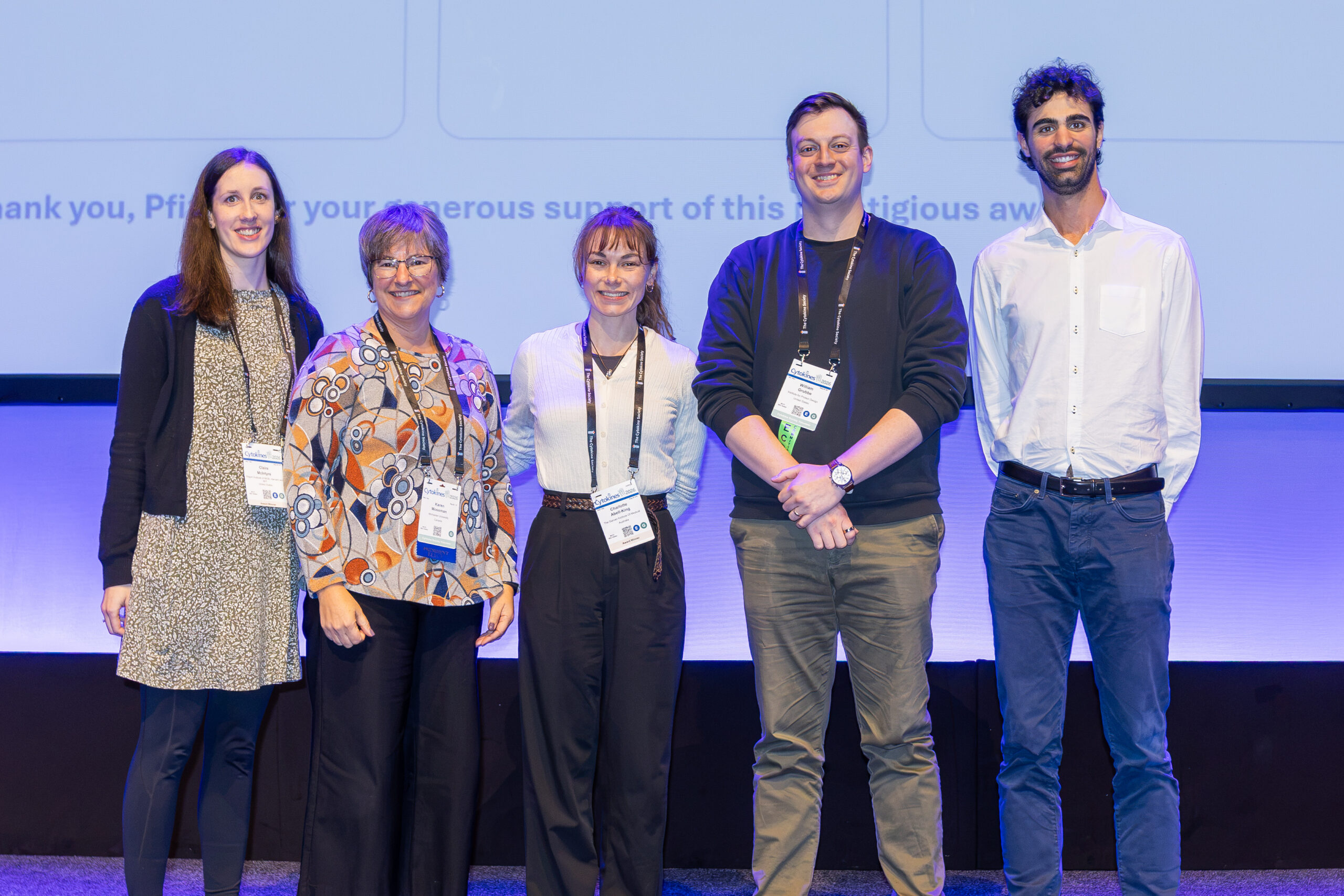
The Ragon Institute of Mass General Brigham, MIT, and Harvard is pleased to announce that Claire McIntyre, PhD, a postdoctoral fellow in the Ringel Lab, has received a 2026 Pfizer Junior Investigator Award from the Cytokine Society.
McIntyre is one of four recipients of this year’s award, which recognizes the most promising research presentations at the Cytokines Annual Meeting. The Cytokine Society, formerly the International Cytokine & Interferon Society, is a professional society for researchers who study cytokines and interferons, the signaling proteins that help direct immune responses. Pfizer has supported the awards since 2021.
The society held this year’s meeting, Cytokines 2026, Oct. 18-21 in Glasgow, Scotland. McIntyre’s presentation was titled “Environmental Lipids Reprogram Cytotoxic T Cells Toward Enhanced Anti-Tumor Activity.” Cytotoxic T cells are immune cells that recognize and kill infected or cancerous cells.
McIntyre studies how lipids that accumulate in tumors affect T cells’ ability to fight cancer, with the goal of improving adoptive cell therapies. These treatments use a patient’s own immune cells, which are collected, expanded or modified in the laboratory, and returned to the patient to fight disease. Using a screening platform, specific fatty acids were identified that boost the cytotoxic machinery T cells use to kill target cells. Treated T cells produced more of the cytotoxic molecules needed for targeted killing and improved the efficacy of adoptive cell therapy in models of melanoma. These findings suggest that lipids are not just fuel for T cells but active regulators of their anti-tumor function, opening new avenues for T cell therapies.
McIntyre joined the Ringel Lab in 2024 after earning a doctorate in immunology from the University of Glasgow and working as a postdoc in the lab of Lydia Lynch at Brigham and Women’s Hospital and Harvard.
The Ringel Lab, led by Alison Ringel, PhD, a core member of the Ragon Institute and assistant professor of biology at MIT, investigates how immune cells interact with their environment at a molecular level. The lab studies the metabolic programs immune cells use under stress, including obesity and aging, to understand how disease states change immune function.