

 Ragon Institute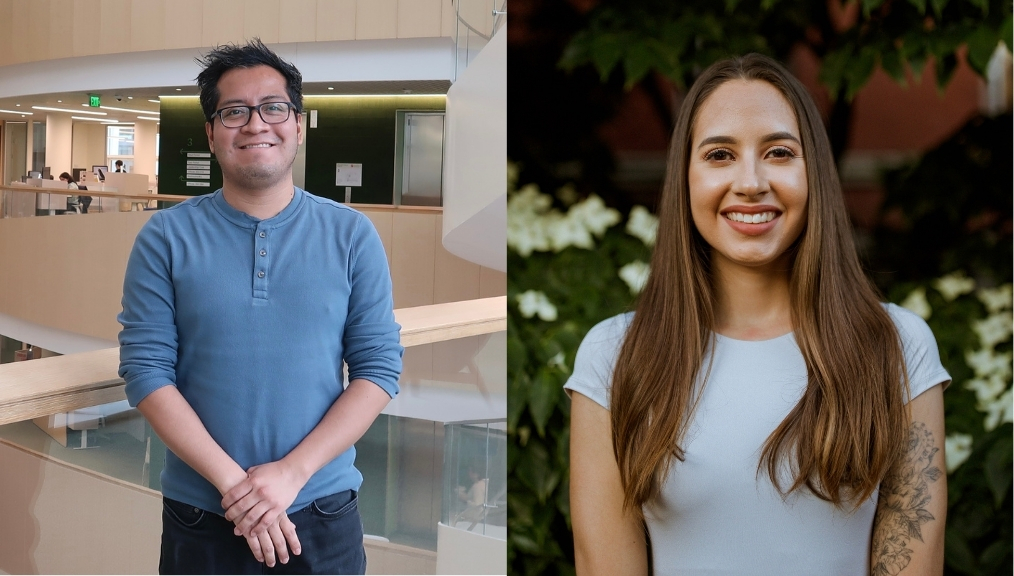
Earlier this year, the Ragon Institute of Mass General Brigham, MIT, and Harvard welcomed Jennie Ruelas Castillo, PhD, and Jonathan Padilla Gómez, PhD, as the inaugural recipients of the FEMSA Fellowship. The fellowship, part of a broader partnership between the Ragon Institute and Tecnológico de Monterrey, supports postdoctoral researchers who have completed studies at research institutions in Mexico in order to pursue immunology research at the Ragon in Cambridge, Massachusetts.
Padilla Gómez, who earned his PhD in biomedical sciences from the National Autonomous University of Mexico (UNAM), is a postdoctoral associate in the Bryson Lab at the Ragon Institute. His research background spans microbiology, lipid biochemistry, and structural biology, and at the Ragon he studies how Mycobacterium tuberculosis persists within human immune cells.
Ruelas Castillo, who earned her PhD from Johns Hopkins University School of Medicine, is a postdoctoral fellow in the Barczak Lab at the Ragon Institute. Her research focuses on tuberculosis (TB), one of the leading causes of death from a single infectious agent worldwide. At the Ragon, she investigates how pathologic tissue remodeling occurs during and after TB infection.
We spoke with both fellows about their paths to the Ragon, their current research, and what it means to be part of the inaugural FEMSA cohort.
Tell us about your background and how you came to focus on tuberculosis research.
Jennie Ruelas Castillo: My academic training and research trajectory have been shaped by a long-standing interest in host-microbe interactions and how these relationships influence tissue pathology and disease outcomes. As an undergraduate researcher under William Sullivan at UC Santa Cruz, I investigated how the symbiotic bacterium Wolbachia interacts with Drosophila melanogaster host stem cells during reproduction. This experience sparked my enduring interest in microbial influences on host cell differentiation and immune function.
During my doctoral training under Petros Karakousis at the Johns Hopkins School of Medicine, I shifted to a translational research focus, investigating host-directed therapies for Mycobacterium tuberculosis infection. This work strengthened my expertise in immunology, TB mouse models, and therapeutic evaluation, while also highlighting the importance of host tissue responses in determining disease outcome. In my current position under Amy Barczak at the Ragon Institute, I am characterizing a mouse model of TB-associated lung fibrosis to better understand post-tuberculosis lung disease, which affects up to half of TB survivors. The goal for this work is to help develop host-directed therapies that alleviate TB-induced pulmonary disease.
Jonathan Padilla Gómez: I did my undergraduate studies in the Bachelor’s program in Genomic Sciences at the Center for Genomic Sciences (CCG), in affiliation with the Institute of Biotechnology, of the National Autonomous University of Mexico (UNAM). I was then admitted into the PhD program in Biomedical Sciences at the CCG of UNAM. There, I carried out my doctoral research under the supervision of Dr. Otto Geiger, broadly focusing on the biosynthesis of non-pathogenic bacterial lipids. Specifically, I studied the biosynthesis of sphingolipids in Rhodobacteria such as Caulobacter, Sphingomonas, and Escherichia coli. I performed the biochemical characterization of the enzymatic activity of genes involved in sphingolipid biosynthesis and conducted phylogenetic analyses to identify potential homologous genes not only in environmental bacteria but also in pathogenic species.
My whole life I have been interested in conducting research with relevance to human health. During the final year of my PhD, I began seeking postdoctoral opportunities that would allow me to direct my research on the study of pathogenic bacteria with a clinically applied perspective. I identified the laboratory of Professor Bryan Bryson at the Ragon Institute, which investigates the host-pathogen interaction of Mycobacterium tuberculosis with macrophages. I contacted Dr. Bryson and was given the opportunity to join the lab as a postdoctoral associate.
Can you tell us about the research you’re doing at the Ragon and how it builds on the work you did before arriving?
Jennie Ruelas Castillo: At the Ragon Institute, under Dr. Amy Barczak, I am characterizing a mouse model of TB-associated lung fibrosis to better understand post-tuberculosis lung disease (PTLD). Pulmonary fibrosis is a common sequela of PTLD and contributes substantially to long-term morbidity, yet treatment options remain limited due to gaps in mechanistic understanding.
To enable a mechanistic understanding of the fibrotic component of PTLD, we adapted the C3HeB/FeJ mouse model of infection to study TB-associated fibrogenesis. We anticipate that detailed mechanistic studies using this mouse model can enable the identification of drug targets and pre-clinical testing of adjunctive therapies for prevention or treatment of PTLD. This work builds on my doctoral thesis, where I used multiple murine models of TB disease and evaluated the efficacy and limitations of host-directed therapies as adjuncts to standard antibiotic regimens.
Jonathan Padilla Gómez: My research here at the Ragon Institute is focused on the host-pathogen interaction between the pathogenic bacteria Mycobacterium tuberculosis (Mtb) and the immune cells known as macrophages. Mtb causes tuberculosis disease in humans, and according to the World Health Organization, it is the leading cause of death globally from a single infectious agent. Therefore, it is primordial that we understand Mtb biology as a pathogenic agent.
In my research I leverage the knowledge that Mtb is constantly exposed to lipid-rich environments during host infection, and I specifically focus on the study of intracellular lipid inclusions formation in Mtb during macrophage infection. In the lab, we employed cross-species transcriptomics to analyze how different host species shape the bacterial metabolic state. We discovered key metabolic differences in Mtb physiology during infection of macrophages from human and mouse, highlighting a species difference that should be considered for successful therapy development.
We were also able to identify host lipid synthesis as a metabolic gate that restricts bacterial lipid access. Conducting research here at the Ragon Institute has allowed me to leverage my previous knowledge about bacterial lipid synthesis and metabolism while also acquiring knowledge about the interplay between host and bacterial lipids, which will be key to developing new therapies against tuberculosis disease.
How has the Ragon’s interdisciplinary environment and access to its facilities shaped your research so far?
Jennie Ruelas Castillo: The expertise within the Ragon Institute makes it feel like a one-stop shop for the diverse tools and knowledge needed to drive immunology research forward. Being surrounded by clinicians, immunologists, computational biologists, and translational researchers creates a constant exchange of ideas that pushes projects in more integrated and meaningful directions. Having access to in-house cores and resources, ranging from the BSL3 facility to sequencing and advanced immunological and imaging platforms, has made it possible to move my projects forward at a high level of exploratory rigor.
Jonathan Padilla Gómez: The Ragon Institute is the perfect place to do science. It is incredible how deeply embedded the Ragon Institute is in the academic, industrial, pharmacological, medical, and university environments, bringing together people from MIT, Harvard, and Mass General Brigham. Being a postdoc also affiliated with the Biological Engineering Department of MIT, I find the Ragon Institute an amazing place to learn and collaborate not just with scientists from different research areas, but also with clinicians and engineers.
“Collaborate, Research, Cure” are the three words, as said by Dr. Bruce Walker, the Director of the Ragon Institute, that describe the spirit of the Ragon Institute, and I truly believe that. I find it amazing that you can see not just graduate-level people at the institute, but also undergraduates and even high school students doing internships and performing actual research, which creates a wonderful working environment. The Ragon Institute has a brand-new building with world-class office and laboratory facilities as well as cutting-edge research cores such as BSL-3, high-resolution microscopy, and flow cytometry. Having the opportunity to be trained and to utilize these tools in my research really pushes it forward to a higher level.
What does it mean to you to be among the inaugural cohort of FEMSA Fellows, and what drew you to this opportunity specifically?
Jennie Ruelas Castillo: It is truly an honor to be among the inaugural cohort of FEMSA Fellows. For me, it is not only a recognition of my individual work, but also a reflection of the collaborative science happening at the Ragon Institute and the broader importance of strengthening research ties between Mexico and the United States.
What drew me to this opportunity specifically was the chance to be embedded in an environment where immunology and infectious disease research intersect with global collaboration. The fellowship represents a unique bridge between my roots in Mexico and my current training, and it aligns closely with my long-term goal of contributing to TB research at a global stage.
Jonathan Padilla Gómez: As a Mexican, I feel incredibly privileged to be awarded with this inaugural FEMSA Fellowship. This represents not just the beginning of a hopefully lasting and fruitful collaboration between Mexico and the Ragon Institute but also a great opportunity to become an example to follow.
In 2024, I was invited by Marco Muñoz, the Executive Director for Strategic Initiatives at the Ragon Institute, to attend the symposium “A roadmap for future collaboration” between the Ragon Institute and Tecnológico de Monterrey, to talk with Mexican students about my experience doing research here at the Ragon Institute. I felt incredibly grateful for the opportunity to express to them how much I love being in a place like this doing research and did my best to inspire them to aim for big things, because I believe that as Mexicans we are very talented and hardworking people who know how to leverage an opportunity when we receive it.
One year later, I was invited to present my work and experience at the Ragon Institute in front of representatives from more than 20 Mexican biotech companies who came to the institute to see the research being conducted here and seek collaboration. The same year, I was nominated by my PI, Dr. Bryan Bryson, PhD, as a candidate to receive the FEMSA Fellowship, which allows postdoctoral fellows who did their doctoral studies either at Tecnológico de Monterrey or at other Mexican universities such as UNAM to receive funding for conducting postdoctoral studies in a Ragon Institute laboratory. Being awarded this year with the FEMSA Fellowship will allow me to continue being trained and to conduct my research in the Bryson Lab here at the Ragon Institute.
Looking ahead, how do you hope this fellowship shapes your career, and what impact do you hope to have on strengthening scientific ties between Mexico and the United States?
Jennie Ruelas Castillo: This fellowship will enable me to lead collaborative and translational infectious disease research between Mexico and the United States. Working at the Ragon Institute has allowed me to train in a highly collaborative and interdisciplinary environment, and I hope to continue building the scientific and leadership skills necessary to address global health challenges such as PTLD.
As a Mexican scientist working in TB research, I am particularly motivated by the disproportionate burden that infectious diseases place on underserved communities throughout Latin America. I want my career to serve as a bridge between both countries by helping expand access to cutting-edge immunology and translational research approaches, while ensuring that scientific discoveries are informed by the needs of the communities most affected by TB.
Jonathan Padilla Gómez: I am genuinely grateful for being part of this inaugural FEMSA Fellowship cohort, as it will provide the necessary funding to perform research at the Ragon Institute for completing my postdoctoral training, and it will position me as a strong candidate for further scientific development.
The FEMSA Fellowship represents a great initial collaboration between the United States and Mexico, led by Tecnológico de Monterrey, a leading university not just in Mexico but in all of Latin America. I am one example, but hopefully this will also allow other Mexican scientific fellows to access the Ragon Institute’s world-class research facilities to conduct cutting-edge science and develop as scientists.
Expanding scientific collaboration between these two countries by creating new partnerships with other leading Mexican universities such as UNAM, or others in Latin America, would strengthen these international strategic scientific partnerships, which are essential for advancing biomedical research that will allow us to face our shared health challenges.