

 Ragon Institute
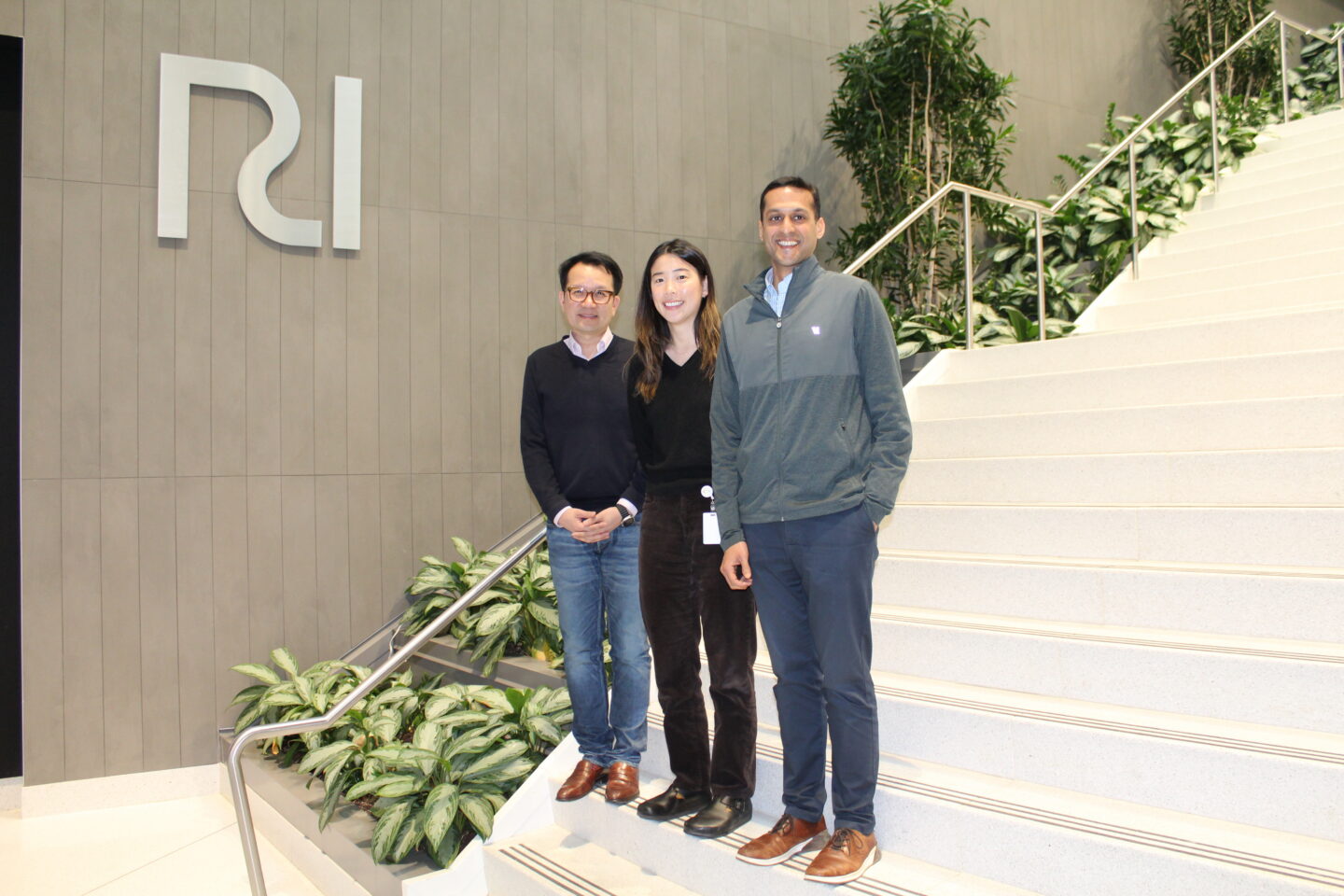
The Ragon Institute is proud to announce the 2026 recipients of the Giammaria and Sabrina Giuliani Faculty Support Fund, an endowed fund dedicated to advancing transformative research at the Institute. This year’s awardees are Amy Barczak, MD, Gaurav Gaiha, MD, DPhil, Douglas Kwon, MD, PhD, and Sophia Liu, PhD, four exceptional scientists whose work is shaping the future of immunology and global health.
Established in 2023 through the generosity of Giammaria and Sabrina Giuliani, philanthropists committed to advancing education and health worldwide, the Giuliani Faculty Support Fund provides critical resources to support our faculty. This year’s recipients exemplify the fund’s mission, tackling some of the most pressing challenges in global infectious diseases:
- Amy Barczak, MD, is investigating how host and environmental factors influence lung repair after infection, with the goal of advancing treatments for post-infectious lung disease caused by conditions such as tuberculosis and acute respiratory viral infections.
- Gaurav Gaiha, MD, DPhil, is advancing his HIV vaccine program, including efforts supporting ongoing clinical evaluation in Southern Africa, while developing a universal T cell vaccine platform to improve global protection against HIV and other infectious diseases.
- Douglas Kwon, MD, PhD, is exploring how the vaginal microbiome influences HIV vaccine effectiveness in women, with the potential to develop microbiome-informed strategies to improve HIV prevention in sub-Saharan Africa.
- Sophia Liu, PhD, is studying how immune cells adapt and coordinate responses within tissues, uncovering the rules that determine why some immune responses succeed while others fail.
The Giulianis’ endowment empowers Ragon faculty to tackle critical questions in global health, ensuring that their research has a lasting impact on human health worldwide.
Amy Barczak, MD
The human lung will encounter a range of viral and bacterial infections over the course of a lifespan. In most cases, our lungs are able to repair the damage from those infections and return to normal function. However, occasionally aberrant repair occurs, leaving residual damage and scarring that interfere with healthy lung function. What cellular and molecular factors drive healthy versus pathologic healing during and after infection? How does this differ between chronic infections such as tuberculosis and acute respiratory viral infections? With the Giuliani award, the Barczak Lab will explore how defined host and environmental factors influence lung repair after infection. Ultimately, this work will contribute to medical advances that enable individuals at risk of post-infectious lung disease to live longer, healthier lives.
“We are deeply grateful for the support of the Giuliani award and the new directions it will enable us to pursue in our work,” Barczak said. “This type of prospective funding is transformative in allowing groups at the Ragon to immediately pursue new and exciting ideas while taking advantage of the cutting-edge technologies and unique resources available at the Institute.”
Gaurav Gaiha, MD, DPhil
Support from the Giuliani Faculty Support Fund will enable the Gaiha Lab to further advance its HIV vaccine program, including efforts that support ongoing clinical evaluation in Southern Africa. In parallel, this funding will accelerate the development of new technologies to create a universal T cell vaccine platform. Together, these efforts aim to advance next-generation vaccine strategies that could improve global protection against HIV and other infectious diseases.
“My laboratory and I are honored to receive this generous support from the Giuliani family to advance both our HIV vaccine and universal T cell vaccine platform,” Gaiha said. “We are extremely grateful for their continued partnership in our broader fight against global infectious diseases.”
Douglas Kwon, MD, PhD
The Giuliani Scholar Award will support the Kwon Lab’s work to understand how the vaginal microbiome influences the effectiveness of HIV vaccines in women. Using samples from the HVTN 705 (Imbokodo) HIV vaccine trial, a large Phase 2b study conducted across multiple countries in sub-Saharan Africa, the lab will investigate how microbial communities in the female genital tract shape susceptibility to HIV infection and vaccine-mediated protection.
Preliminary analyses suggest that women with Lactobacillus-dominant vaginal microbiota experience substantially greater vaccine-associated protection than those with non-Lactobacillus-dominant communities. This work could help guide the development of microbiome-informed strategies, including live biotherapeutic products, to improve HIV prevention and vaccine performance for women globally, particularly in regions such as sub-Saharan Africa where HIV incidence remains highest.
“I am deeply grateful to the Giuliani family for supporting our work,” Kwon said. “Understanding how the vaginal microbiome shapes HIV vaccine protection could open entirely new approaches to HIV prevention, especially for women in regions where the epidemic remains most severe.”
Sophia Liu, PhD
The Liu Lab is studying how immune cells adapt and coordinate responses within tissues to better understand protective immunity during infection and disease.
“Our lab is excited to track how immune cells evolve and interact within tissues, uncovering the rules that determine why some immune responses succeed while others fail,” Liu said.
“Immune responses happen in complex tissue environments, and we still have much to learn about how cells coordinate to fight disease,” Liu added. “This support gives us the chance to develop new ways to observe these processes directly.”
As part of their philanthropic efforts, Giammaria and Sabrina established the Giuliani Foundation, dedicated to advancing education and health as well as promoting economic wellbeing in developing countries.
The Foundation has funded a wide breadth of projects through their philanthropy, including the COVID-19 response in Italy, vocational training for young adults in developing countries, as well as research into medical conditions such as cancer, neurodegenerative diseases, and HIV/AIDS, among other projects.
The Ragon Institute is honored to have such visionary partners in the Giuliani family, whose philanthropy continues to drive advances in immunology and global health. Congratulations to the 2026 Giuliani Scholars on this well-deserved recognition.