

 Ragon Institute
The Ragon Institute recently welcomed Eric Sun, PhD, a computational biologist whose research sits at the intersection of machine learning and the biology of aging. Joining Ragon from Stanford University, where he completed his PhD, Sun brings a uniquely interdisciplinary approach (spanning chemistry, physics, applied mathematics, and biomedical informatics) to understanding why and how we age.
Sun’s fascination with aging began as a teenager in Pueblo, Colorado and that curiosity led him from early research experiences at the National Institute on Aging through undergraduate work at Harvard and doctoral studies at Stanford, where he developed computational tools to study aging at the cellular and organismal level.
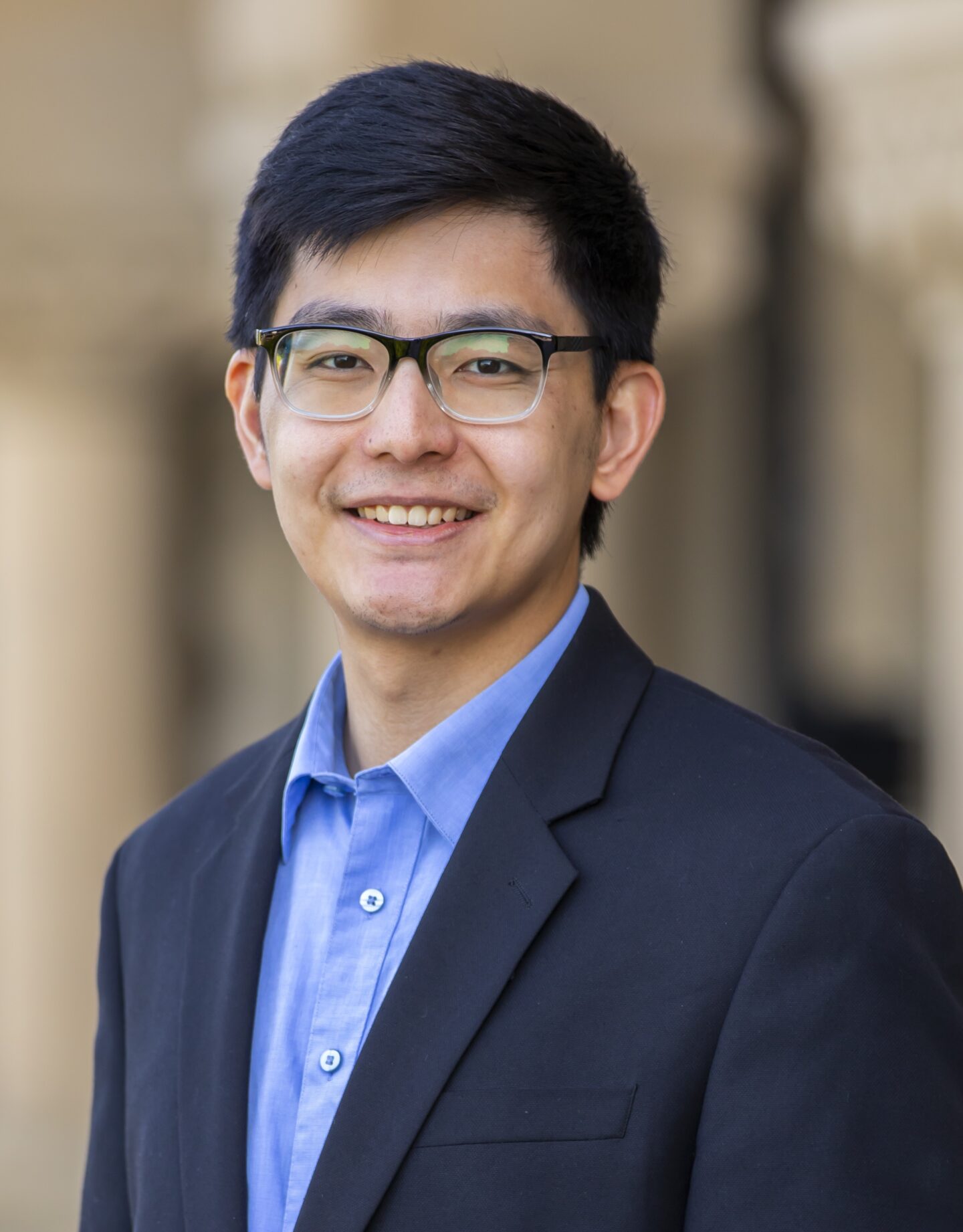
In this interview, he shares what drew him to the field, how computational methods can unlock new insights in immunology, and what he hopes to achieve at Ragon in the years ahead.
Tell us about your background and what drew you to your field?
“Growing up in Pueblo, Colorado, I was surrounded by the beautiful plains and mountains, and this proximity to the natural world stoked my early interest in science. As a kid, I wanted to be an astronaut or paleontologist. When I started taking school more seriously, my two favorite subjects by far were biology and math. It was also around this time, that I became deeply fascinated with the biology of aging. Why do we age? What drives aging? Why do some organisms live longer than others? And no matter how many books I read, I couldn’t find the answers to these questions, which motivated me to pursue a career in science.
My first real research experience was at the National Institute on Aging (NIA), starting under the mentorship of Ilya Goldberg and then with Jun Ding for several years. While there, I worked on building physiological biomarkers of human aging using longitudinal studies, and flavors of this work can still be traced to parts of my group’s research program today. In the summer between high school and college, I also had an exciting experience at the Weizmann Institute doing computer vision research, which was my first exposure to AI/ML systems.
At Harvard, I primarily worked with L. Mahadevan and Thomas Michaels in the Applied Math Lab, building mathematical and computational frameworks to optimally control aging in complex systems. I also spent several summers exploring experimental and multi-omics approaches to study aging at Harvard Medical School and Stanford.
I was excited to go to Stanford for my PhD studies, since it offered a welcome change of scenery. There, I was co-advised by James Zou and Anne Brunet, which enabled me to deep dive into machine learning and the biology of aging—the two areas that define my research program today. I also developed a strong interest in spatial and single-cell biology and built new computational algorithms to obtain biological insights from these incredibly rich data modalities. Now, I’m excited to return to the Cambridge area to start my own lab at the Ragon Institute and MIT.”
What was your path to coming to the Ragon Institute?
“I’ve always been excited by immunology, especially in the context of aging. A common thread in my past research has been the role of neuroimmune interactions in brain aging—involving both resident immune cells like microglia and infiltrating peripheral immune cells like T cells in the brain. I have also been quite interested in the promise of immune engineering as way to develop therapeutics to promote health across multiple organ systems. As such, I was initially drawn to the Ragon Institute due to its world-class immunology research programs.
After my initial visit to the Ragon Institute, I was further struck by how welcoming, friendly, and collaborative everyone was, and I knew immediately that it would be an immensely supportive environment for building a new research program.
You have a unique academic background spanning chemistry, physics, applied mathematics, and biomedical informatics. How have these different disciplines shaped your approach to research?
My approach to research is “problem-centric”, meaning that the problem of interest (in my case, aging) has remained constant while the methods of attacking the problem have varied considerably across disciplines. In this context, a broad academic background has been quite helpful in developing new interdisciplinary approaches to tackle problems relevant to the study of aging.
Switching disciplines and learning new concepts from scratch have also been helpful exercises. As a result, I am excited rather than intimidated to explore new research directions, even in areas where I may little expertise at present.
How does computational and machine learning research complement the immunology work being done at the Ragon, and what makes studying aging through this lens unique?
There is a lot of synergy between computational and machine learning approaches and the exciting immunology research being done at the Ragon. Immunology is characterized by enormous heterogeneity, very complex intercellular interactions, and increasingly higher-dimensional readouts. Computational and machine learning methods are uniquely well-suited towards tackling problems with these properties, and these methods can enable the discovery of subtle patterns or organizing principles from complex datasets – much like finding the proverbial needle in a haystack.
Studying aging through the lens of immunology is important because the immune system has a particularly active role in many aspects of aging from chronic inflammation and cellular senescence to the different diseases of aging. Due to the influence of the immune system on virtually all tissues, there is also a unique opportunity to engineer or rejuvenate the immune system as an intervention to broadly improve health. In this research area, there are many exciting experimental efforts, and my goal is to contribute a unique computational perspective.”
What are the goals and research areas of the Sun Lab?
“We are interested in modeling and understanding multi-scale, complex biological processes. Aging is a prime example of such a biological process—it traverses different levels of organization from cells to whole organism and involves complex interactions and emergent phenomena at each level. Over the next few years, my lab will be focused on (1) building complex biomarkers of aging, (2) predicting and simulating biological responses of cells, tissues, and organisms to interventions, and (3) combining biomarkers with AI/ML frameworks to discover and optimize interventions against aging, with a particular emphasis on immune interventions.
Although my lab’s research program primarily involves the development of new computational and machine learning models, we are also building key experimental pipelines for data generation, model validation, and intervention testing.”
What do you foresee as the most exciting aspects of your work in the next five years?
“I’m very interested in building an automated framework that combines computation with high-throughput experiments to study complex biological processes like aging. Over the next five years, many of the research projects in my lab will focus on building out key computational and technological modules that will make this a possibility.”