

 Ragon Institute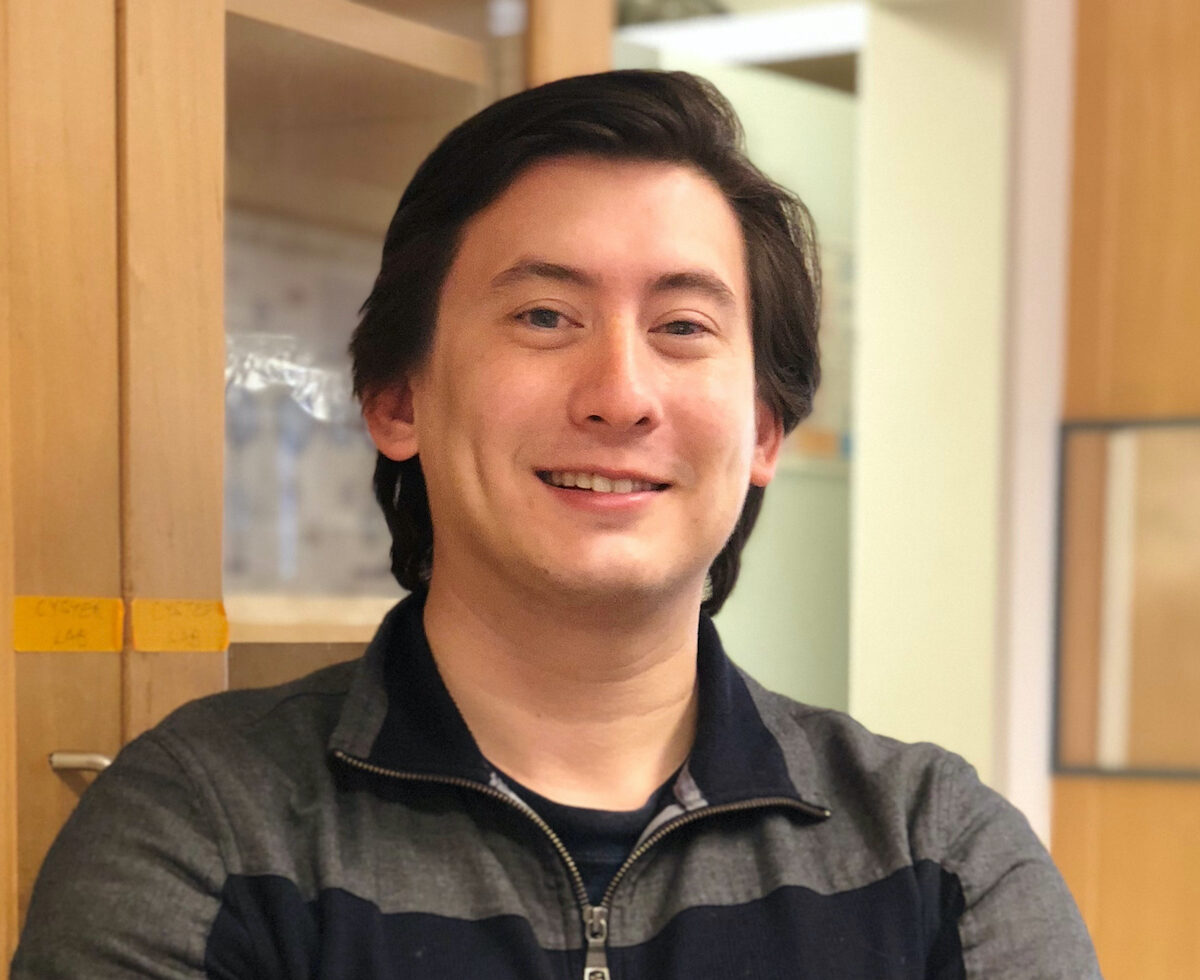
The Ragon Institute faculty recently expanded with the addition of Eric Dang, PhD, a renowned microbiologist whose work on fungi broadens our research to new areas. Coming to Ragon from the National Institutes of Health (NIH), he is expanding a research program that bridges fundamental immunology with microbial genetics, with a growing focus on how these mechanisms play out in human disease.
Dang’s path into immunology began in an unexpected place as a collegiate lacrosse player who first stepped into a lab as an undergraduate at Johns Hopkins. Since then, his work has moved from T cell biology to innate immunity and host–fungus interactions, including deep expertise in the fungal pathogen Cryptococcus neoformans.
In this interview, he shares what drew him to his research, why fungal infections are an underrecognized and rising threat, and what he’s most excited to pursue at Ragon in the years ahead.
Could you tell me about your background and what drew you to your field?
“So I probably had a smoother route than some people. I went to college initially as a collegiate lacrosse player, but I got interested in medicine and joined a research lab my sophomore year just to dabble in bench work. I didn’t totally know what I was getting into, but I fell in love with it.
At Johns Hopkins, I joined Drew Pardoll’s lab, which is a leader in tumor immunology, and they gave me real freedom early on. I got to contribute to projects on T cell differentiation, and that’s when I became fascinated by the immune system—its cellular complexity, the way different cells communicate, and how it coordinates across organs.
After undergrad, I spent a year in the UK in Anne O’Garra’s lab at the National Institute for Medical Research. That was where I really immersed myself in immunology as a discipline—seminars, journal clubs, deep reading.
Then I started an MD-PhD program at UCSF. I did two years of medical school and then my PhD with Jason Cyster. I initially joined to study immune cell positioning in lymphoid organs, but we ended up chasing a side project on cholesterol metabolism in macrophages. That work really shaped how I think about innate immunity—specifically how metabolism influences inflammatory responses.
By the end of my PhD, I realized I wanted to stay at the bench full time, so I didn’t go back to medical school. I pursued a postdoc in Hiten Madhani’s lab at UCSF, studying Cryptococcus neoformans. What drew me there was that we knew relatively little about host interactions with fungi. In Hiten’s lab I used fungal genetics and unbiased screens to find fungal effector molecules that influence macrophage responses, and we published some of that work.
When I started my own lab at NIH in 2022, I wanted to combine everything I’d trained in—cellular and molecular immunology, fungal genetics, and host–pathogen biology—to understand how hosts detect fungi and make protective versus detrimental immune decisions, and how fungal molecules can shape host function. That’s the program I’m continuing here at Ragon, with more of a human element added in.”
What was your path to coming to the Ragon Institute specifically?
“When I started looking at opportunities outside NIH, what really struck me about Ragon was the cross-disciplinary perspective—people focused on immunology and infectious disease, but from many different angles.
My background is very mechanistic and basic-science driven, and I want to keep doing that. But I’ve also been eager to move more into understanding human disease, working with human samples, and collaborating more closely with clinical researchers. The opportunity at Ragon really aligned with that goal and was a big impetus for me to come here.”
Your work focuses on fungi, which isn’t a major area for many labs. What distinguishes working with fungi from other types of immunology or microbiology?
“Fungi are fascinating for a few reasons. First, they’re single-celled microorganisms, but they’re also eukaryotes. Their basic cellular machinery is similar to ours, which creates interesting challenges for how the immune system detects and responds to them.
Second, there are size and shape issues. Many environmental fungi are dimorphic—they switch between yeast forms and more mold-like forms depending on temperature. So even with one organism, you’re dealing with multiple physical versions of the pathogen, and that changes how the host interacts with it.
Third, because fungi are eukaryotes, their secretion machinery is different from bacteria. They can secrete a wide range of proteins and small molecules that interface with our cells in ways we still don’t fully understand.
There’s also this rich history of fungi in medicine. Penicillin originally came from fungi. Statins come from fungi. So beyond pathogenesis, I think of fungi as macromolecule machines that can produce products with powerful effects on human biology, and we’re only scratching the surface.”
Why is this area important for human health right now?
“Fungal infections are an increasing source of human disease. In my talks, I often start by pointing out that fungi cause about 10 million infections and around 2 million deaths per year. People are usually surprised by that. And that burden is only going to grow, so it’s something we need to pay attention to.”
How are you getting your lab up and running at Ragon? Are you continuing NIH work and moving the team over?
“One advantage I have is that my group at NIH has a one-year wind-down period, so people are still working there and will transition up here throughout the year. Having continuity with the team helps a lot.
That said, there’s still the practical setup work—getting IBC protocols approved, animal protocols approved, and building the infrastructure here. But compared to starting a lab from scratch, where you walk into an empty room and build everything yourself, this feels smoother. There are always challenges, but I’m less stressed about the transition because of that continuity.”
If you had to summarize your research for a general audience in a few sentences, how would you describe it?
“We are constantly inhaling billions of fungi every day. We also eat food that’s coated in fungi, and those exposures enter our gut. All of these environmental fungi have the potential to influence our bodies, but we don’t really understand the rules of the game for how that happens.
What I’m trying to understand is: beyond just fungal infections, how does constant exposure to fungi—especially in different environments with different fungal communities—affect our health over time?”
Looking forward, what are you most excited about in the next five years of your work?
“We have a number of projects where we’ve built really strong mouse data. What I’m most excited about now is testing how many of those basic principles hold up in human systems.
For example, we’ve found that if you take fungal secreted molecules and add them to organoid cultures, you see striking effects on cell fate decisions. A big goal is to do the analogous experiments with human organoids and learn how much of that biology translates.
Also, given Ragon’s strength in vaccinology, we’re doing a lot of work on how fungal antigens are captured and presented. I think some of what we’re learning could inform how to generate durable memory T cell responses.
So overall, it’s about continuing to push the basic science, but working with new collaborators here to take it into more translational directions.”